
What we do
We undertake applied, policy-relevant research on coastal adaptation, marine and coastal assets, habitat enhancement, conservation, and development.
Our work focuses on improving coastal management through:
-
Providing advice on coastal and marine policy
-
Developing decision-making tools and frameworks
-
Assessments of development and conservation trade-offs


Our approach
Our Coastal and Marine research is guided by methods from environmental economics, human geography, and other social sciences, including:
-
Travel cost analysis/ non-market valuation
-
Developing standardised protocols for data collection
-
Focus groups and interviews
For a detailed overview of our capabilities and examples of applications, we invite you to visit our capabilities page.


Our Centre has a long-standing partnership with the UWA Oceans Institute. Together, we provide economic expertise to key funded programs with a focus on sustainable coastal development, ecosystem stewardship, and community resilience, including the Better Oceans Program and Our Marine Parks.
Other CEEP partners include:
-
Australian Research Council
-
WA Department of Planning, Lands and Heritage (DPLH)
-
WA Department of Transport
-
WA Department of Water and Environmental Regulation (DWER)
-
Local governments across Western Australia
-
Western Australian Marine Science Institution (WAMSI)
-
National Environmental Science Program (NESP) Marine & Coastal Hub
-
The Australian Institute of Marine Science (AIMS)
-
Perth NRM
-
Surfing Western Australia
-
WAMSI-WESTPORT Marine Science Program
Key Researchers

A/Prof Abbie Rogers
.png)
Dr Ana Manero


Dr Carmen Elrick-Barr
.jpg)
A/Prof Natasha Pauli

Dr Alaya Spencer-Cotton
Industry Tools & Resources
Priorities for coastal research in Western Australia
This is a white paper authored by a range of experts from universities, associations, business and government.
It is a detailed discussion of the current state of knowledge in coastal research and the research priorities to support WA coastal management. The analysis identified a list of nine ‘Tier 1’ priorities that were voted as the most important knowledge gaps to address.

This paper was a collaboration between Perth NRM, WAMSI, and several academics at UWA, including the UWA Oceans Institute.
Current Research

Risk and resilience in coastal WA
Details
Funding: WA Premier’s Early-to-Mid Career Fellowship & Coast WA
Dates: 4 years (2023 - 2027)
Partnerships: WA Department of Planning, Lands & Heritage, the WA Department of Transport, Department of Energy and Economic Diversification, and many local WA councils.
Project Overview
Recognising that the frequency and intensity of coastal hazard events is increasing globally, coastal managers are grappling with how they can prioritise their investments in coastal management to ensure protection of important coastal assets, while trying to do so cost-effectively.
This research program is delivering a body of work across coastal visioning, community values and hazard management planning. A major focus is developing an economic prioritisation tool that will enable coastal managers to weigh up the benefits and costs of different coastal protection and adaptation projects. It will explicitly integrate not only the financial costs and benefits of those projects, but also the social and environmental ones. Concurrently, a coastal community values database is being developed, and a coastal visionary project has been implemented to better understand local community values.
For more information on these projects, visit the program website: https://www.resilient-ways.com/program-2
CEEP Researchers
A/Prof Abbie Rogers, A/Prof Michael Burton, Dr Alaya Spencer-Cotton, Dr Curtis Rollins, and Cheryl Day.
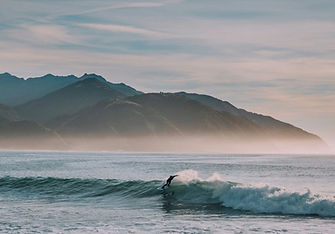
Valuing Australia's surfing resources for sustainable coastal management
Details
Funding: Australian Research Council's Early Career Industry Fellowship
Dates: 3 years (2024 - 2027)
Partnerships: Surfing Western Australia
CEEP Researchers
Dr Ana Manero, Cheryl Day

Waatu Wardan Kaartdijin: communicating Sea Country health and action.
Details
Funding: Our Marine Parks
Dates: 3 years (2024 - 2027)
Partnerships: 6 saltwater Bibbulmun Noongar groups in WA’s South West, including Traditional Owners, Zac Webb from the Undalup Association and Karri Karrak Aboriginal Corporation, Noel Morich from the Whadjuk Aboriginal Corporation, and Doc Reynolds from Esperance Tjaltjraak Native Title Aboriginal Corporation.
CEEP Researchers
Dr Matthew Navarro

A New Vision for Coastal Resilience: Engaging Communities through Art to Design a Transformative Future
Details
Funding: Better Oceans Program
Dates: 3 years (2024 - 2026)
Partnerships: Oceans Institute & UWA School of Design.
Project Overview
This multidisciplinary project is exploring new methods to engage with coastal communities to envision innovative solutions for a more resilient coastal future. Coastal Communities will be encouraged to express their desired future using arts-based approaches, including photography, paper collage or textile creation. The artworks will be coupled with the team’s knowledge of coastal processes, policy and economics to create a design brief, that UWA students in Landscape Architecture will use to generate designs.
The team has explored the viability of using this novel, interdisciplinary approach to generate community visions that could be used as decision support for coastal adaptation, and to help in overcoming the bias toward short-term coastal protection measures that can be reinforced through traditional methods for engagement and decision making.
CEEP Researchers
A/Prof Natasha Pauli, A/Prof Abbie Rogers, Dr Carmen Elrick-Barr

Featured Blogs


Body of research
We have a large body of work related to marine and coastal. The following list is a selection of recently completed research projects, where you'll find a range of studies exploring various topics within our Marine & Coastal Theme. You are welcome to contact one of the authors to learn more.
Burton, M., Pauli, N., Clifton, J., Nejati Ajibisheh, M., Kiatkoski Kim, M., & Rogers, A. (2024). Community values for environmental assets in Cockburn Sound. Plus Appendices. Prepared for the WAMSI Westport Marine Science Program.
Hughes, M., Kobryn, H., Henningsen, S., Burton, M., Rogers, A., Pauli, N., Clifton, J., & Kiatkoski Kim, M. (2024). Spatial mapping of non-fishing recreational activities and associated values in Cockburn Sound, Western Australia. Western Australian Marine Science Institution.
Rogers, A (2024). Presentations on Theme 6: Social Values. Prepared for the WAMSI Westport Marine Science Program (WWMSP Symposium).
Navarro, M., Burton, M., Rogers, A., Pearce, J., Clifton, J., Kim, M., Obregon, C. (2025). Opportunities and impacts for recreational fishing from the Westport development Final Report. Prepared for the WAMSI Westport Marine Science Program.
Rogers, A., Doll, C., Burton, MP., Cabalu, H., Lowe, R. (2025). Evaluating suitability of investing in environmental enhancements in Cockburn Sound: a benefit cost analysis of port design features. Prepared for the WAMSI Westport Marine Science Program.


Community values
Elrick-Barr, C., & Rogers, A. (2023). Community values and vision for Cockburn Sound. The University of Western Australia.
Elrick-Barr, C., & Rogers, A. (2023). Industry Note: Understanding the social and environmental values the community hold for Cockburn Sound. The University of Western Australia.
Elrick-Barr, C. E., Clifton, J., Cuttler, M., Perry, C., & Rogers, A. A. (2023). Understanding coastal social values through citizen science: The example of Coastsnap in Western Australia. Ocean and Coastal Management, 238, Article 106563.
Pauli, N., Biggs, E., Elrick-Barr, C., & Rogers, A. (2024). Connecting people and place through art and photography: Community values for the Cockburn coastal region. The University of Western Australia.
Elrick-Barr, C., Clifton, J., Cuttler, M., Perry, C., & Rogers, A. (2021). Real-time monitoring of coastal community values: First season project report. The University of Western Australia.
Coastal hazard management
Coastal Hazard Risk Management and Adaptation Planning Guidelines, Appendix 5 materials for conducting non-market valuation: Link.
Morris, R. L., Campbell-Hooper, E., Waters, E., Bishop, M. J., Lovelock, C. E., Lowe, R. J., Strain, E. M. A., Boon, P., Boxshall, A., Browne, N. K., Carley, J. T., Fest, B. J., Fraser, M. W., Ghisalberti, M., Gillanders, B. M., Kendrick, G. A., Konlechner, T. M., Mayer-Pinto, M., Pomeroy, A. W. M., ... Swearer, S. E. (2024). Current extent and future opportunities for living shorelines in Australia. Science of the Total Environment, 917, Article 170363.
Morris, R. L., Bishop, M. J., Boon, P., Browne, N. K., Carley, J. T., Fest, B. J., Fraser, M. W., Ghisalberti, M., Kendrick, G. A., Konlechner, T. M., Lovelock, C. E., Lowe, R. J., Rogers, A. A., Simpson, V., Strain, E. M. A., Van Rooijen, A., Waters, E., & Swearer, S. E. (2021). The Australian guide to nature-based methods for reducing risk from coastal hazards. LInk
Rogers, A., Elrick-Barr, C., Day, C., Spencer-Cotton, A., Rollins, C., & Burton, M. (2024). Public preferences for communication of coastal adaptation decision processes: Focus Group Report. The University of Western Australia.


Marine Biodiversity Hub & Marine & Coastal Hub
Navarro M, Langlois TJ, Burton M, Hegarty A, Aston C, Kragt ME and Rogers A (2021) Social and economic benchmarks of the Australian Marine Parks, report to the National Environmental Science Program, Marine Biodiversity Hub, University of Western Australia.
Davis, K. J., Burton, M., Rogers, A., Spencer-Cotton, A., & Pandit, R. (2019). Eliciting public values for management of complex marine systems: An integrated choice experiment. Marine Resource Economics, 34(1), 1-21.
Navarro, M., Langlois, T., Burton, M., Hegarty, A., Aston, C., Kragt, M., & Rogers, A. (2021). Social and economic benchmarks of the Australian Marine Parks: Project D6 - Socioeconomic benchmarks . National Environmental Science Programme.
Richert, C., Rogers, A., & Burton, M. (2015). Measuring the extent of a Social License to Operate: The influence of marine biodiversity offsets in the oil and gas sector in Western Australia. Resources Policy, 43, 121-129.
Funnelkamp, C., Vegh, T., Rogers, A., Bakken, P., Zimmerhackel, J., & Verbeek, J. (2023). Chapter 4: Economic perspectives on kelp management. In Into the Blue: Securing a Sustainable Future for Kelp Forests (Vol. DEP/2505/NA). United Nations Environment Programme, New York.
Zimmerhackel, J. S., Kragt, M. E., Rogers, A. A., Ali, K., & Meekan, M. G. (2019). Evidence of increased economic benefits from shark-diving tourism in the Maldives. Marine Policy, 100, 21-26.
Zimmerhackel, J. S., Rogers, A. A., Meekan, M. G., Ali, K., Pannell, D. J., & Kragt, M. E. (2018). How shark conservation in the Maldives affects demand for dive tourism. Tourism Management, 69, 263-271.
Vianna, G. M. S., Meekan, M. G., Rogers, A. A., Kragt, M. E., Alin, J. M., & Zimmerhackel, J. S. (2018). Shark-diving tourism as a financing mechanism for shark conservation strategies in Malaysia. Marine Policy, 94, 220-226.
Rogers, A. (2013). Social welfare and marine reserves: Is willingness to pay for conservation dependent on management process? A discrete choice experiment of the ningaloo marine park in australia. CANADIAN JOURNAL OF AGRICULTURAL ECONOMICS-REVUE CANADIENNE D AGROECONOMIE, 61(2), 217-238.
Rogers, A. (2011). The policy relevance of choice modelling: an application to the Ningaloo and proposed Capes Marine Parks. Thesis. The University of Western Australia.