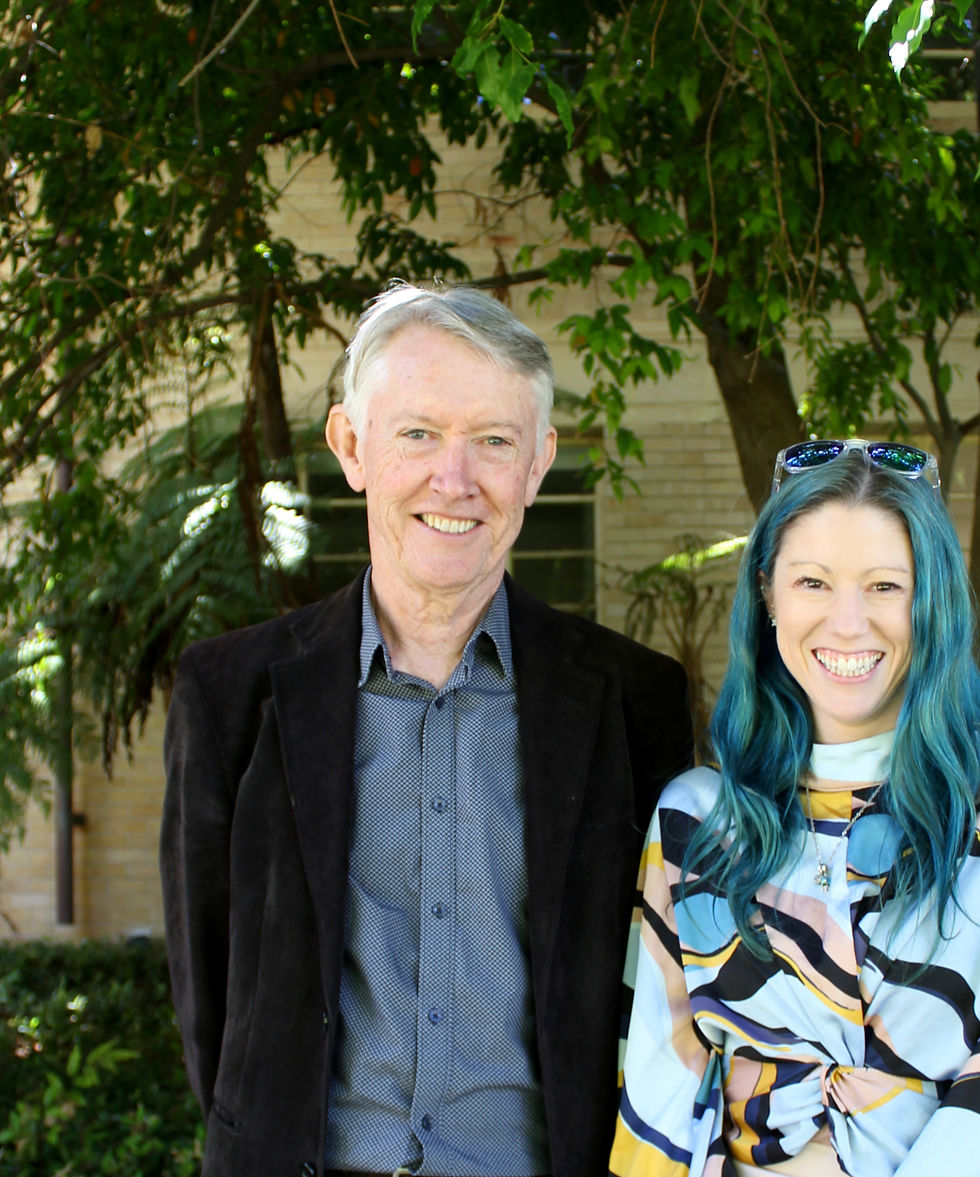
Discussing Nature markets: lessons from an interdisciplinary workshop
On 19 November, CEEP co-hosted Making Nature Markets Work: Lessons for Australia, an interactive workshop led by Professor Ben Groom at the UWA Business School.
Professor Groom holds the Dragon Capital Chair in Biodiversity Economics at the LEEP Institute, University of Exeter. His research focuses on the measurement and valuation of biodiversity, carbon offsets and nature-based solutions. He is also a member of the HM Treasury Biodiversity Working Group and is currently working on the Economics of Biodiversity Additionality (BIOADD) project, which examines how to define, measure and price the additional biodiversity benefits of nature-based climate policy.
The workshop brought together researchers, policy makers and practitioners to explore how nature markets can be designed and implemented effectively. Drawing on Professor Groom’s experience in the UK, including the incorporation of biodiversity and other environmental benefits into carbon markets, participants considered what lessons might be relevant to Australia’s existing and emerging environmental markets, and to biodiversity markets in particular.

Lessons for Australia
Participants concluded that the conditions behind successful environmental markets (a clearly defined unit, credible demand, many buyers and sellers, independent verification, and a long institutional and legal build-up) are much harder to meet for biodiversity. Concerns about measurement and market integrity emerged as central difficulties facing the field.
Biodiversity has many dimensions, and no single metric captures all of them. Trade-offs, in particular between ecological integrity and the cost savings that make trading attractive in the first place, further complicate the creation of market-based biodiversity policies. The discussion also highlighted the role of transparent data collection underlying the market for credits, offsets or other market-based instruments, allowing for the additionality of projects to be evaluated both before and after implementation.
Participation across sectors and academia
The workshop brought together varied perspectives from across the UWA School of Agriculture and Environment (SAGE) and the UWA Business School, including economists, ecologists, biologists and soil scientists, as well as from government, research institutes, finance and the private sector.

This allowed for a nice diversity of starting points and experiences to be reflected in the discussion. Ecologists and soil scientists focused on the physical definition of a biodiversity unit, while participants working with finance and voluntary markets brought experience of how credits are typically verified and traded in similar markets. Views on whether a tradable unit of biodiversity can be defined at all differed across disciplines, again highlighting some of the next challenges for the practical policy design and implementation.
Participants from government and policy shifted the focus from market design to the conditions for policy change, in particular the need to build ecosystem services literacy among decision makers and to make the case for nature in terms of jobs and productivity.
Key takeaways
Overall, participants saw clear promise in nature markets. Compared to uniform standards and legislative individual caps, trading can both meet environmental targets at lower cost and direct new funding to supporting biodiversity, with current biodiversity policy (rather than a perfectly efficient theoretical policy) serving as the relevant benchmark.

The concerns about market approaches to biodiversity preservation were equally clear. Additionality cannot be assumed, and markets designed around a single dimension of biodiversity can miss others. Several participants and discussion groups suggested that crediting specific management actions or stewardship practices, along with focusing on outcomes correlated with biodiversity that are easier to measure, might offer a practical way forward.
For Australia, participants saw the National Nature Restoration Framework, currently being developed, as a near-term opportunity.
Prof. Groom also noted that the exchange of ideas between the two countries runs both ways. England drew on Australia’s state-level offset schemes when it began developing biodiversity offsetting (the forerunner of Biodiversity Net Gain), and this experience may now be useful as Australia further develops its own nature markets.
Overall, it was a very productive workshop. We thank everyone who participated in the workshop, particularly those from outside the university who shared their practical experience and perspectives.
Acknowledgements
Prof. Groom’s visit was funded by the Economic Society of Australia, with support from the WA Branch of the Australian Agricultural and Resource Economics Society (AARES), CEEP, SAGE and the UWA Business School. We thank everyone who took part, in particular the participants from outside the university who brought their practical experience into the discussions.
For more information
Workshop organisers:
Dr Claire Doll: claire.doll@uwa.edu.au
Abbie Rogers: abbie.rogers@uwa.edu.au
Tammie Harold: tamara.harold@uwa.edu.au
Prof Ben Groom:
Ben Groom's Recent Papers:
Emmerling J, Groom B and van der Ploeg F (2026). ‘The Inequality Adjusted Social Cost of Carbon’. Journal of the Association of Environmental and Resource Economists.
Lee B. et al., (2026). ‘The Carbon at Risk measure to manage carbon removal risk and guide effective portfolio construction’. Nature Climate Change.
Palmer C, Groom B, Sileci L and Langton S (2026). ‘Biodiversity-food trade-offs when agricultural land is spared from production’. American Journal of Agricultural Economics.
Cavatorta E and Groom B (2025). ‘Revealing the Zone Of Possible Agreement between parties in conflict: an application to peace agreements between Israelis and Palestinians.’ PNAS Nexus, 4(1), pp. 581-590.
Linsenmeier M, Groom B and Roth S (2026). ‘Economic specialization and heterogeneous temperature-economy relationships suggest net costs of climate change in Europe’. Nature Communications.
Venmans F, Rickels W, Groom B (2025). ‘Temporary carbon dioxide removals to offset methane emissions’. Nature Climate Change.
Drupp M A, Hansel M, Groom B, et al. (2024). ‘Accounting for the increasing benefits from scarce ecosystems.’ Science, 383, 6687, pp. 1062-1064.
Groom B and Venmans F (2023). ‘The Social Value of Offsets’. Nature, 619, pp 768-773.
Photos from the workshop: