The ripple effect: how CEEP research is putting surf breaks on the policy map
Updated: Sep 3
Surfing is a way of life, but it is also a source of health and wellbeing, connection to community and nature, and an important contributor to local economies.

Australia is home to more than 1,400 surf breaks, including some of the world’s best waves. Yet despite their significant social, environmental and economic value, surf breaks are often overlooked in coastal planning and management.
UWA's Centre for Environmental Economics and Policy (CEEP) is working to change this by leading a groundbreaking ARC-funded project that is helping reshape how Australia values and protects its surf breaks.
WA Fieldwork
This winter, a team of researchers took to the coasts of Western Australia to explore why surfing is so precious to those who practise it. What are the key threats to these unique coastal spaces, and, most importantly, what can be managed and protected?
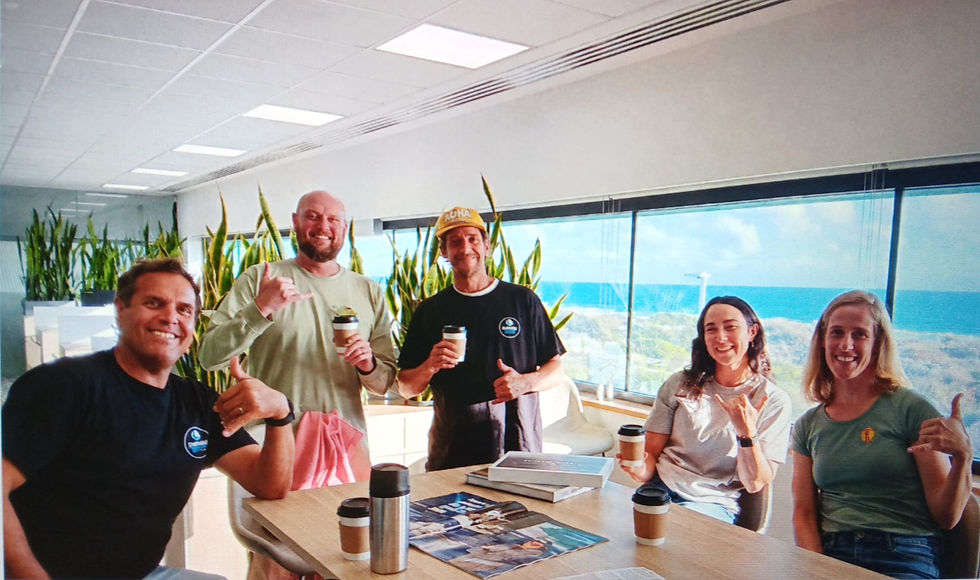
CEEP member, Dr Ana Manero, together with Dr Leon Mach (Associate Professor of Environmental Policy at the School for Field Studies in Panama) and Kane Holtom (Senior Project Officer at Surfing Western Australia), spent two weeks in July and August 2026 covering more than 1,200 km.
From Geraldton to Albany, stopping in Perth, Yallingup and Margaret River, the team spoke to surfing communities and government agencies, collecting data about the values, pressures and solutions in relation to WA’s surfing resources.
What the surfers are saying
Despite being a highly individualistic sport, surfers rated a sense of community belonging and mental health benefits among the top reasons why surfing is important to them.
As one participant said:
“Waves are irreplaceable – once you’ve caught one, there will never be another one just like that. It makes you feel grateful for every little thing.”
Time in the water also means a wealth of ocean knowledge, which becomes embedded in the experience of local surfers. This local knowledge provides a valuable perspective on how WA’s coast is changing.
As another participant put it:
“Where there are no written records, our community knows what’s happened over the last 50 years.”
Participants reported changes they have witnessed over decades, including shifts in sand and sediment that are changing how surf breaks form and whether they continue to produce rideable waves.
Some coastal infrastructure projects have even wiped out some of Perth’s already scarce surf spots. Algal blooms, biodiversity loss and growing tourism pressures are some of the other issues affecting WA’s surfing environments. The loss of three surf breaks to the expansion of the Ocean Reef Marina highlighted the importance of the natural assets.
As one member of the local community explained:
“There was biodiversity loss, which is why they had to get the area excised from the Marmion Marine Park. […] At the time, they should have also considered the surfing asset because there's biodiversity in marine park, but there's also the humanity. No one ever talks about that.”
The timing of the fieldwork meant that the researchers could join the first anniversary celebrations of the artificial surf reef at Middleton Beach in Albany, providing an opportunity to see first-hand how the new surfing resource is being used and valued.
From fieldwork to policy
The fieldwork formed part of a broader collaboration with Surfing WA, where Kane Holtom is leading efforts to advocate for and secure better outcomes for WA’s surfing communities through enhanced surf amenity and infrastructure.
With research experience across Asia, Latin America and beyond, Dr Mach brought a valuable global perspective to the WA fieldwork, complementing local knowledge and informing how our surf breaks can be better understood and protected.

Dr Mach is an internationally recognised environmental researcher whose work explores the value of surfing to tourism, and how climate change and growing coastal pressures are reshaping the sport.
He shared his international perspectives on surf tourism, sustainability and the governance of surfing resources at a seminar hosted by the UWA Oceans Institute.
The insights gathered through this research, together with examples from Aotearoa New Zealand and the Gold Coast, will inform the development of WA’s first state-wide surf management guidelines. In particular, the research team identified an opportunity to include surf break management in the upcoming review of the State Coastal Planning Policy Guidelines coastal hazard risk management and adaptation planning (CHRMAP) guidelines.
If you want to know more, check out the project Valuing Australia’s Surfing Resources for Sustainable Coastal Management and get in touch.
The team acknowledges the recent passing of Mark Lane, CEO of Surfing WA since 2010. Mark’s vision and support were instrumental in the development of the current research project, which the team are deeply grateful for.
For more information
Dr Ana Manero: ana.manero@uwa.edu.au
Video: Surfing Economics
Project Summary: Valuing and protecting Australia’s Surfing Resources
Website: www.surfingeconomics.org
Collaborators
Dr Leon Mach: www.leonmach.com
Surfing WA: https://surfingwa.com.au/